Here is a great link for owner's on how to help your pets become comfortable with brushing their teeth!
How to Brush Your Pet's Teeth
Thursday, February 18, 2016


Wednesday, February 17, 2016
Debunking the Grain-Free Myth - Dr. Fiona Caldwell

The driving force behind the increasing popularity of
grain-free dog foods is mostly marketing and not based on actual research. Here
are some common myths about grains in dog foods and the truth behind them.
Aren't grains poorly
digestible?
Consumers are often told that grains such as wheat and
corn are poorly digestible, and they should not be used in good-quality cat and
dog foods. The truth is that the nutrients in grains are often readily available
and absorbable to dogs.
Some prescription GI diets whose goal it is to be highly
digestible will use grains such as rice and corn to deliver nutrients.
Aren't a lot of
dogs allergic to grains?
There are very few reported cases of dietary intolerance
or proven food allergy to corn in either cats or dogs.
Unlike corn, however, wheat and specifically wheat gluten
can be a cause of food intolerance and hypersensitivity in dogs. It is
estimated that about 5% of allergic dogs (not all dogs, just 5% of allergic dogs) are actually allergic to their food,
and most are allergic to the animal protein (chicken, beef, pork, etc).
Beef, dairy and other protein sources are much more
frequently implicated as causes of food allergies in dogs.
 Isn't corn and
wheat bad for dogs?
Isn't corn and
wheat bad for dogs?
There is very little, if any, objective scientific
evidence that shows corn is deleterious when used as an ingredient in
commercial pet foods. The nutrients in corn are in fact readily utilized by the
dog. While it cannot be used as the sole source of protein, it can be an
important part of a balanced diet.
Corn is an excellent source of several important
nutrients, including the essential fatty acid linoleic acid, as well as the
carotenoids β-carotene and zeaxanthin.
Wheat is unique and particularly valuable amongst
cultivated grains because of its high protein content. It is well utilized in
dogs, and similarly to corn can be part of a nutritious diet.
Aren't grains just
'fillers'?
Studies show that dogs can thrive on plant based proteins
in addition to animal based proteins in their diet. Dogs are not obligate
carnivores, they are omnivores, meaning they eat a little of everything.
Grains, including corn, wheat, rice, barley, oats,
sorghum, millet, rye, and others can all be a nutritious part of a well
balanced diet. They can contribute not only as a protein source, but can also
provide essential nutrients such as fatty acids.

Ok, you convinced
me... Are grain-free diets bad then?
Studies providing clear evidence that grain-free cat and
dog foods are better are lacking, but this does not necessarily mean you should
avoid a good-quality pet food that also happens to be grain-free.
As long as the diet is a good quality, proven complete
and balanced dog food with either detailed chemical analysis or feeding trials,
then it doesn't really matter.
The primary contraindication to the use of grain-free
foods in cats and dogs is probably the fact that these diets tend to be
relatively high in both fat and protein. High fat content means more calories
which can predispose to obesity in some animals.
High protein intake is contraindicated in animals with
significant preexisting renal or hepatic dysfunction. Furthermore, when protein
intake is higher than the actual requiremen
t, the extra protein will simply be stored
as body fat.
The best dog food for your dog is the one that keeps your
dog the healthiest, with shiny coat and normal stools and minimal flatulence.
Thursday, February 11, 2016
February is National Pet Dental Health Month - Dr. Cavender
February is
National Pet Dental Health Month
Good oral health is more than just a pretty smile. This
is the time of year we remind owners to think about their pet's oral health
care.
Poor dental hygiene can put both your pet’s health and
your pocket book at risk. “Dog breath” – or a cat with a foul-smelling mouth –
can be a sign of untreated dental conditions. If left untreated, you may put
your pet at risk for greater problems such as periodontitis.


Routine cleanings can help prevent periodontal disease
and save money in the long run. A 2014 analysis conducted by Veterinary
Pet Insurance Co. showed that the average cost per pet to prevent dental
disease is just one-third of the average cost of treating dental
disease.
More importantly, a complete oral examination can detect
hidden health problems. Even if your pet’s breath smells fine, there still
could be dental conditions that are hard to spot without a complete veterinary
exam. Most pet dental disease occurs
below the gum line, where you can not see it.
Your pet's teeth and gums should be checked at least once a year by your
veterinarian.
 Schedule your pet’s dental checkup with us now. We’ll do
a thorough checkup to make sure your pet is at optimum health. We also can show
you how to brush your pet’s teeth in between exams. Brushing is the single most
effective thing you can do to keep your pet’s teeth healthy between dental
cleanings. It may also reduce the
frequency or even eliminate the need for periodic dental cleaning by your
veterinarian.
Schedule your pet’s dental checkup with us now. We’ll do
a thorough checkup to make sure your pet is at optimum health. We also can show
you how to brush your pet’s teeth in between exams. Brushing is the single most
effective thing you can do to keep your pet’s teeth healthy between dental
cleanings. It may also reduce the
frequency or even eliminate the need for periodic dental cleaning by your
veterinarian.
We’re committed to your pet’s health and wellness, and we
know that you are as well. Book your appointment today! We look forward to helping your pet have a
clean and healthy new year!1
1.
www.avma.org/PetDental
Wednesday, January 27, 2016
Canine Influenza
Canine Influenza is a highly contagious infection that can be caused from 2 different strains, H3N8 and H3N2. H3N8 is the strain that was responsible for the outbreak 10 years ago. The outbreak in Chicago last spring was caused by H3N2. It takes 2-4 days before dogs start showing symptoms and this is when they are most highly contagious, allowing them to spread the disease unknowingly.
Symptoms of Canine Influenza come in two forms, the mild form and the severe form. Most dogs develop the mild form and although Canine Influenza is highly infectious, it has a fairly low fatality rate (less than 10%). Mild form infections have a soft moist cough that can last for up to 30 days. They can become lethargic, have a low grade fever, decreased appetite, sneezing, and discharge from the eyes. They can get secondary bacterial infections and develop thick nasal discharge. Sometimes the cough is very similar to the dry cough of “Kennel Cough.” The severe form infections are associated with high fevers (104-106 degrees) and develop pneumonia and difficulty breathing. The pneumonia may be due to a secondary bacterial infection.
Treatment for Influenza is mostly supportive and can range from just monitoring at home to hospitalization for IV therapy depending on the severity of the illness. The canine influenza virus is not transmissible to humans and there have been no reports in cats. The dogs that are most at risk are ones that are in close proximity to other dogs such as boarding facilities. There have only been 2 reported cases in Idaho recently. If your dog is coughing it is most likely not Canine Influenza, but your pet should be seen to be evaluated for other respiratory diseases.
At this time we are not recommending vaccinating for Canine Influenza for the general population; however if you have a high risk pet (traveling or being exposed to a large amount of dogs such as at a dog show that have been traveling) please let us know and we can discuss whether or not vaccination should be considered.
We will continue to monitor the situation and keep you updated on changes.

Symptoms of Canine Influenza come in two forms, the mild form and the severe form. Most dogs develop the mild form and although Canine Influenza is highly infectious, it has a fairly low fatality rate (less than 10%). Mild form infections have a soft moist cough that can last for up to 30 days. They can become lethargic, have a low grade fever, decreased appetite, sneezing, and discharge from the eyes. They can get secondary bacterial infections and develop thick nasal discharge. Sometimes the cough is very similar to the dry cough of “Kennel Cough.” The severe form infections are associated with high fevers (104-106 degrees) and develop pneumonia and difficulty breathing. The pneumonia may be due to a secondary bacterial infection.
Treatment for Influenza is mostly supportive and can range from just monitoring at home to hospitalization for IV therapy depending on the severity of the illness. The canine influenza virus is not transmissible to humans and there have been no reports in cats. The dogs that are most at risk are ones that are in close proximity to other dogs such as boarding facilities. There have only been 2 reported cases in Idaho recently. If your dog is coughing it is most likely not Canine Influenza, but your pet should be seen to be evaluated for other respiratory diseases.
At this time we are not recommending vaccinating for Canine Influenza for the general population; however if you have a high risk pet (traveling or being exposed to a large amount of dogs such as at a dog show that have been traveling) please let us know and we can discuss whether or not vaccination should be considered.
We will continue to monitor the situation and keep you updated on changes.

Thursday, January 21, 2016
What to expect if your pet needs dental care by Evann Thoms
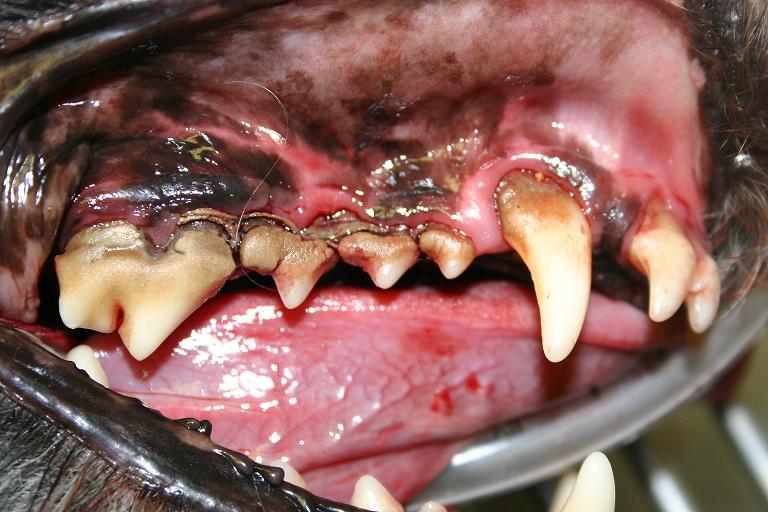
A full 85% of
pets have periodontal disease by the age of 3 years old.
Surprisingly enough, there is little
physical difference between the dog or cat's tooth and the human tooth. If we do not regularly disinfect our mouths
and brush away plaque, plaque can quickly mineralize into tartar or
calculus. Bacteria then starts to build
up under the tartar, and thus the big nasty disease process starts! Bacteria that lives under tartar in the mouth
can seed into other areas of the body, affecting organ function and can be carried
virtually anywhere the bloodstream goes.
 It's
a good idea to start being comfortable opening your pets mouth and taking a
peek inside. Lift the lips and
physically look at the teeth. If your
pet allows, briefly take a glance at the inside surface of the teeth and back
of the mouth. Take a good whiff too!
It's
a good idea to start being comfortable opening your pets mouth and taking a
peek inside. Lift the lips and
physically look at the teeth. If your
pet allows, briefly take a glance at the inside surface of the teeth and back
of the mouth. Take a good whiff too! 


So
what about a non-anesthetic cleaning?
Most groomers are now offering "anesthesia free" dental
cleaning, but it is IMPOSSIBLE and important to note that the 6 step cleaning
process is not safe or possible to do without anesthesia. It is important to protect a pets airway from
the tartar and bacteria we are chipping away from their teeth, along with being
able to see all surfaces of the teeth including the inside, to probe and look
for disease. Groomers and daycare facilities
more commonly offer to brush a pets teeth for you, which if tolerated, is
fantastic! Can you imagine our children's
day care facilities offered to help brush our kids teeth twice a day while they
were there?! On a more serious note,
typical brushing and cosmetic cleaning of
a pets teeth do not address the more serious periodontal disease where
is occurs: UNDER THE GUM LINE.

Wednesday, December 16, 2015
Holiday Dangers for Pets
Christmas
is almost here and with it comes some unique dangers to your pets.
One of the most notable is tree ornaments and tinsel.

Cats primarily are
known for eating tinsel, which can get caught in the intestine, causing
the intestines to bunch up like an accordion. This requires extensive surgery to
remove. Gift wrapping ribbon can also cause similar symptoms.
Ornaments seem to equally popular between cats and dogs. Keeping
any glass or breakable ornaments higher on the tree is best to avoid them from being ingested, or causing cuts in the mouth. Some of the soft ornaments
are just the right size to be eaten and get stuck in the intestinal
tract. If you have a pet known to eat things they shouldn't, it is
probably best to keep the accessible part of the tree bare.
Christmas lights also pose a threat to dogs and cats alike. Chewing on cords can cause electrical shock which can cause injuries ranging from electrical burns in the mouth to death. Always use a grounded 3 pronged plug and try to keep cords out of reach.
Christmas lights also pose a threat to dogs and cats alike. Chewing on cords can cause electrical shock which can cause injuries ranging from electrical burns in the mouth to death. Always use a grounded 3 pronged plug and try to keep cords out of reach.
As
we are receiving and baking special treats this time of year, it is important to
remember that there are several things that our pets should not be
eating. Chocolate is probably the most common toxin people know about. It does not
take very much baking chocolate to cause a toxicity. If your pet ingests
chocolate they should be examined by a veterinarian. Fat trimmings and
other rich foods can also cause severe gastrointestinal upset such as vomiting,
diarrhea and pancreatitis. Any baked treats that contain Xylitol can be
life threatening for your pet as well. Macadamia nuts are also toxic and
can cause severe tremors.
Although this is a sharing time of year, the best idea is to not share our Holiday foods
with our pets!
By Dr. Jennifer Pearson, Idaho Veterinary Hospital
By Dr. Jennifer Pearson, Idaho Veterinary Hospital
Subscribe to:
Posts (Atom)